

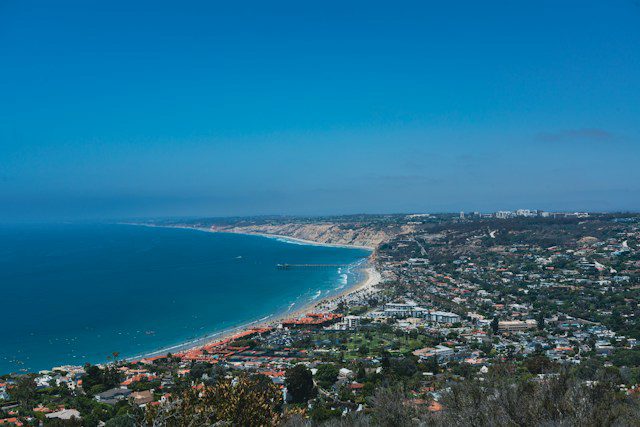
When I moved here from San Francisco, the thing I worried about most wasn’t the job market or the cost of living. It was whether I’d have to drive everywhere. In SF I walked to coffee, to dinner, to the farmers market, to basically everything. I had a rule that I’d walk anywhere 30 minutes or less, and if it was dark out, I’d take an Uber or the bus home. I didn’t want to give that up.
Living in a walkable area is good for your body and soul. It’s not just about getting your steps in. It’s the chance to admire whatever you come across, whether that’s architecture, a conversation with a stranger, or nature. I’ll admit that my first week living in San Diego (my first time having a car in a couple of years), I was like, WAHOO, I can drive to these stores, buy whatever I want, and just toss it in my trunk! In my previous city gal life, I carried groceries on each side of me, plus a backpack, up and down hills.
San Diego as a whole is not a walking city. Walk Score gives the city a 53 out of 100, which lands it in “somewhat walkable” territory. San Francisco sits at 89 and is ranked the most walkable large city in the country. So yes, it’s a big gap.
But that citywide number hides a lot. San Diego has real pockets where you can leave the car parked for days, and a few of them actually score higher than SF’s average. The trick is knowing where they are.
The most walkable neighborhoods, grouped by vibe
I’ve split these into three buckets because the lifestyle is really different in each one. Downtown is high-rise condo living. The neighborhoods in Central San Diego are generally older homes, bungalows and small apartment buildings. The beach towns are, well, the beach.
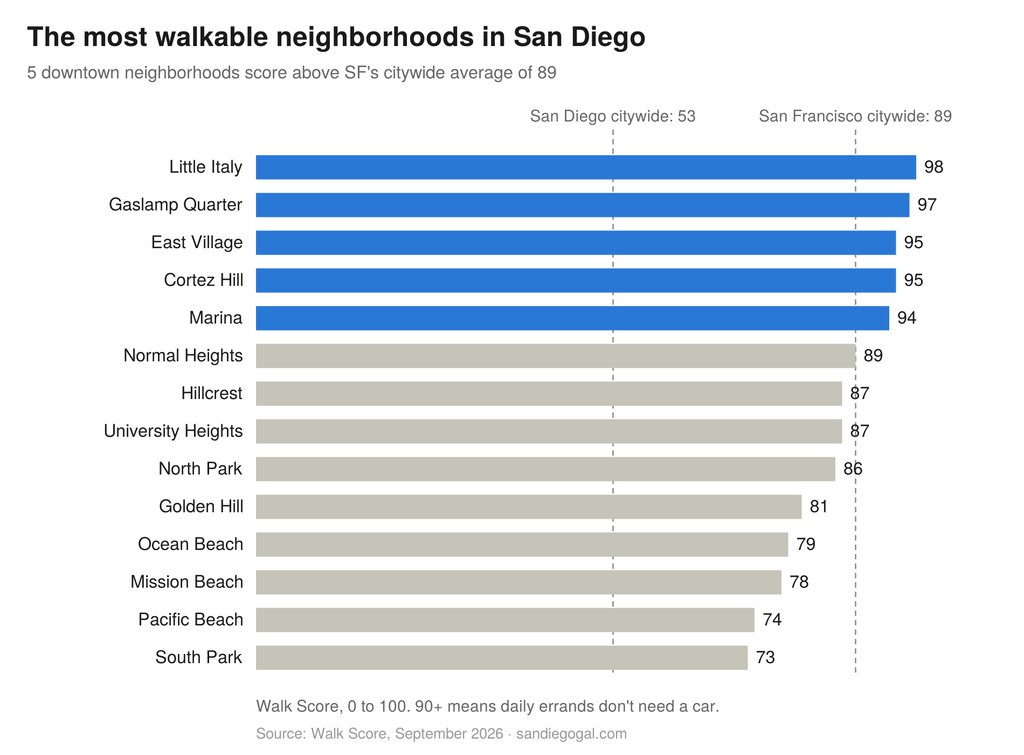
The dashed lines show where San Francisco and San Diego land citywide, so you can see which neighborhoods actually hold up against what you’re used to.
Downtown: true car-optional living
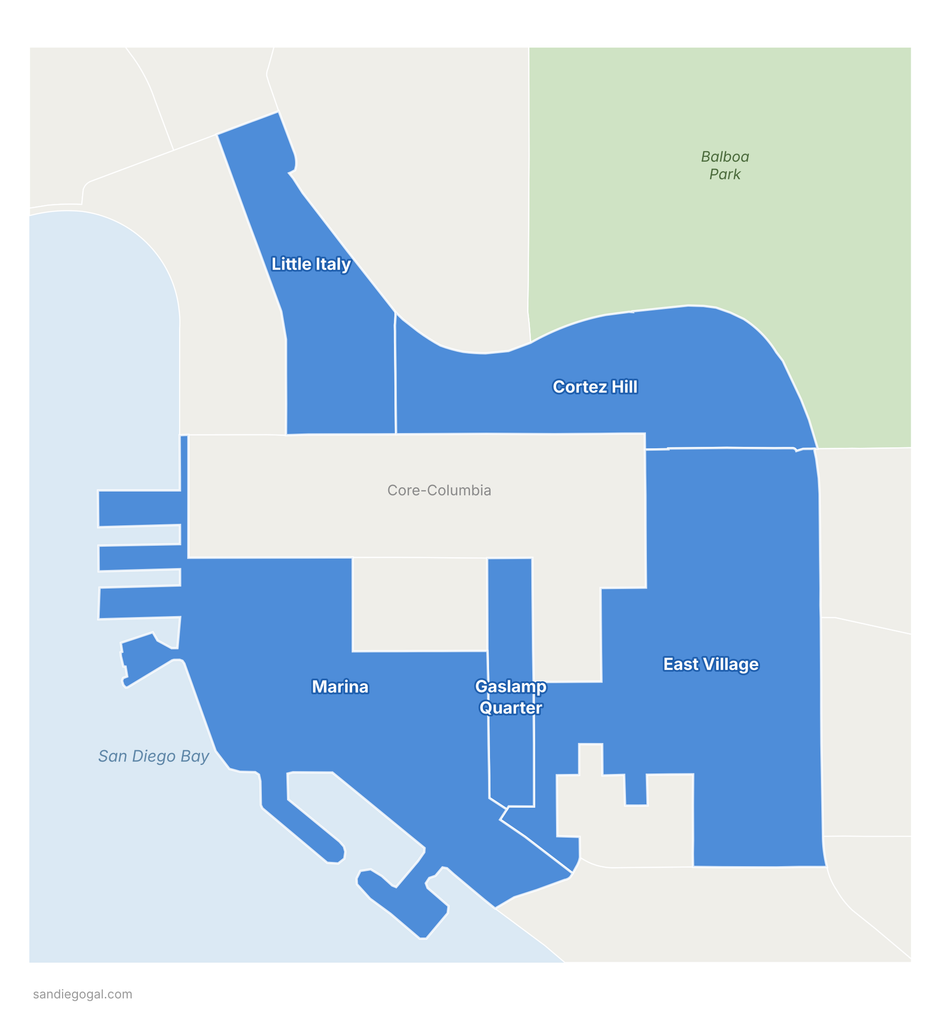
If you want the closest thing to SF-style walkability, this is it. Downtown has the six highest walk scores neighborhoods in the city.
Little Italy is the most walkable neighborhood in San Diego, full stop. You’ve got the Saturday Mercato farmers market, a ridiculous number of restaurants on India Street, and the waterfront a few blocks away. It’s also one of the easier places to meet people because everyone’s out and about. Housing is mostly condos, and it’s one of the pricier parts of downtown.
East Village is the biggest downtown neighborhood by population and it’s where a lot of newer condo towers are going up. You’re walking distance to Petco Park, the Central Library, and a bunch of breweries and coffee shops. It’s a great fit if you want a newer building with amenities.
Gaslamp Quarter is the nightlife center. It’s fun to live near and very walkable, but make sure you’re content with being in the center of where the bars and clubs are.
Cortez Hill is a quieter, more residential pocket on a hill just north of Broadway. You get downtown access without being right in the middle of the noise.
Marina sits along the bay by Seaport Village and the convention center. It’s calmer than the Gaslamp and great if you want waterfront walks built into your day.
Who it’s for: people coming from condo or apartment living in SF who want to ditch the car, young professionals, and empty nesters downsizing.
The catch: you can totally be car-free downtown, but the moment you want to go somewhere else, like the beach or up to North County, you’ll have to figure out public transit. Most people around here just enjoy a short car ride for those trips.
A heads-up: like a lot of downtowns, San Diego’s has visible homelessness in some areas, and the feel can change from one block to the next. Before you move, walk your exact block in the morning and at night.
Central San Diego: walkable with a neighborhood feel
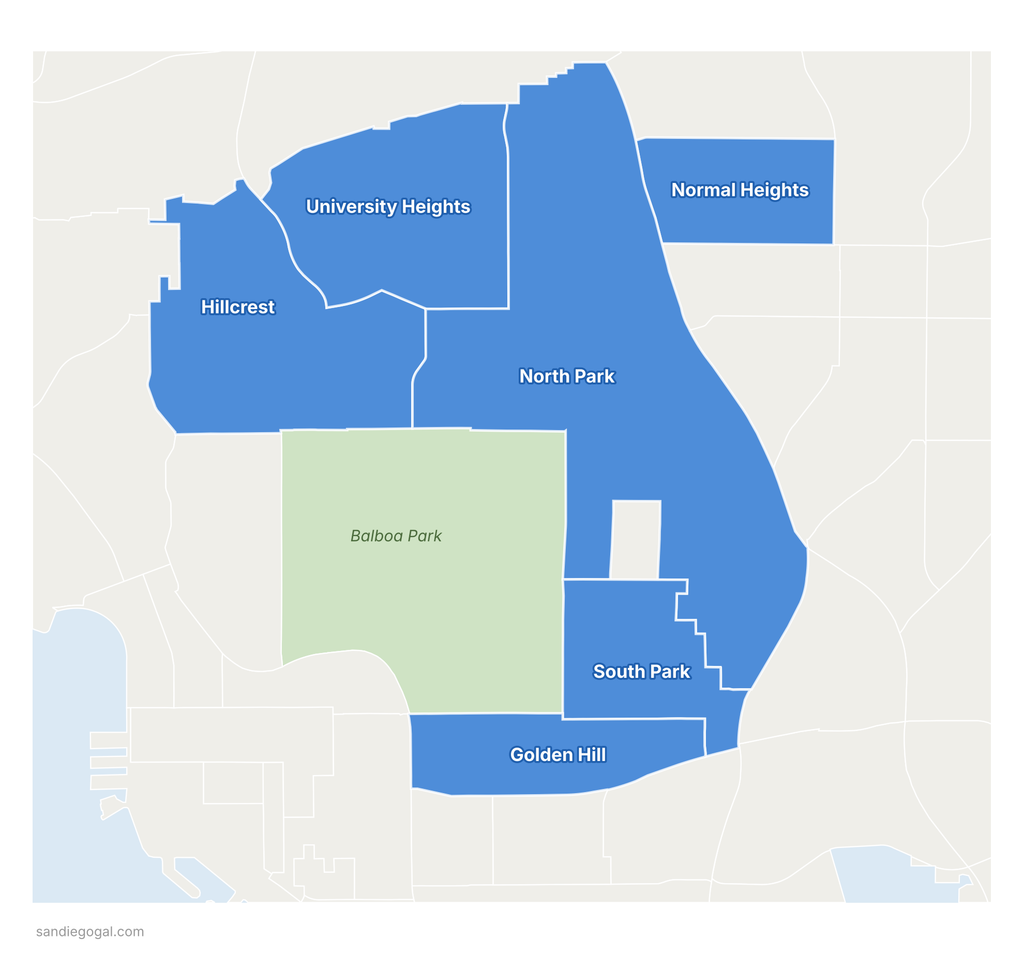
The most walkable neighborhoods in Central San Diego basically surround Balboa Park, so a weekend stroll through the park is never far away. Think tree-lined streets, Craftsman bungalows, local coffee shops and walkable main drags, minus the downtown towers. These neighborhoods still score as very walkable, though hills and canyons mean some blocks feel more walkable than others.
Normal Heights scores the highest of this group. Adams Avenue is the spine of the neighborhood, with bars, restaurants, antique shops and a small-town main street feel.
Hillcrest is lively and dense, with a Sunday farmers market, tons of restaurants, and easy access to Balboa Park. It’s one of the more urban-feeling neighborhoods outside of downtown.
University Heights is right next door and a little quieter. Park Boulevard has great restaurants, and you’re close to both Hillcrest and North Park.
North Park is the biggest neighborhood on this list and probably the one I get asked about most. 30th Street and University Avenue are packed with breweries, coffee, and restaurants.
Golden Hill sits on the east side of Balboa Park and is a bit more under the radar. It has historic homes, a few great local spots, and downtown is close by.
South Park is small and charming, with independent shops and restaurants around 30th and Juniper, with Balboa Park right there.
Who it’s for: people who want a house or a smaller building, a real neighborhood identity, and the option to walk to dinner most nights.
The catch: street parking can be tough in some of these neighborhoods, especially North Park. Look for a place with the exact number of parking spots you need, so you’re not circling the block every night.
The beach towns: walkable, but with a catch
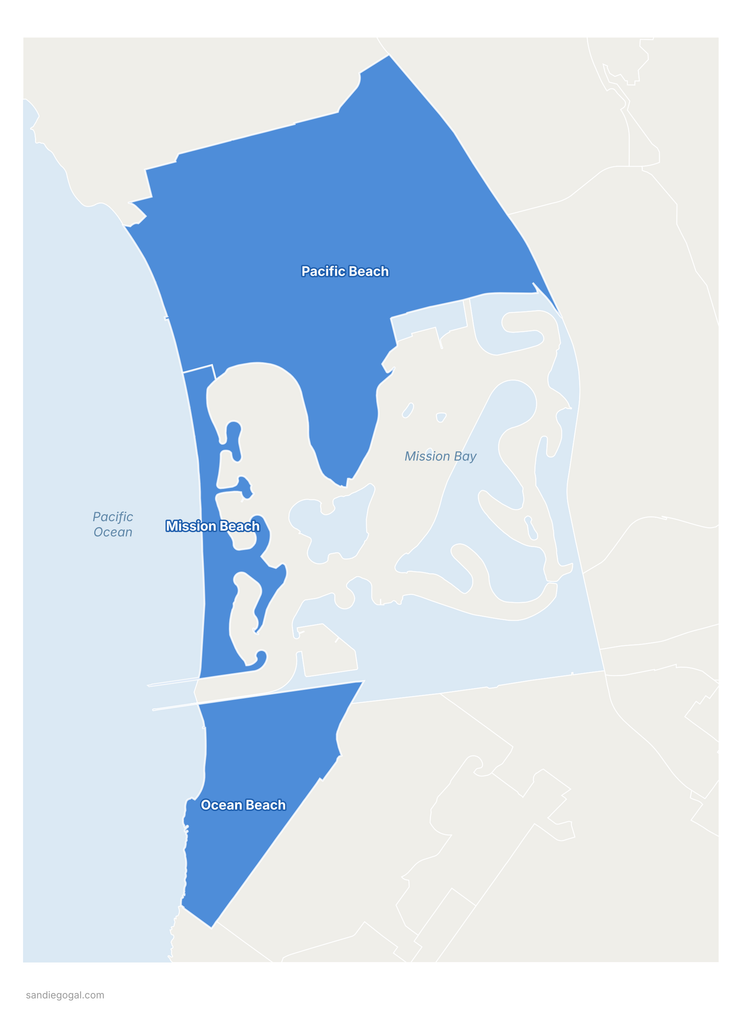
The beach neighborhoods are more walkable than most people expect, especially close to the water. The catch is transit. None of them have trolley service (though there are bus lines), so if you commute somewhere inland, you’ll likely still want a car. For getting around locally, some families use golf carts to get to the beach during the busy summer season, and you’ll see folks taking cruiser bikes around as well.
Ocean Beach is the most walkable beach town in the city. Newport Avenue has everything from coffee to tacos to the Wednesday farmers market, and you can walk to the pier and Dog Beach. When I lived in OB, we had a moped to get around locally in addition to our cars. Parking was easy, and the rides down Sunset Cliffs were so nice. Read my Ocean Beach guide here.
Mission Beach is a skinny strip between the ocean and the bay, so pretty much everything is close. The boardwalk makes walking and biking easy, but it gets packed with visitors in the summer.
Pacific Beach is bigger and has a younger, more social scene along Garnet Avenue. The areas closest to the boardwalk are the most walkable; farther inland, you’ll drive more. Besides the boardwalk, there are nice stretches of walking and running paths around Sail Bay and Crown Point Park that I frequented on a daily basis during my time living in PB.
Who it’s for: people who want to walk to the sand, enjoy the ocean breeze and lifestyle, and are okay driving for some errands or work.
Honorable mentions
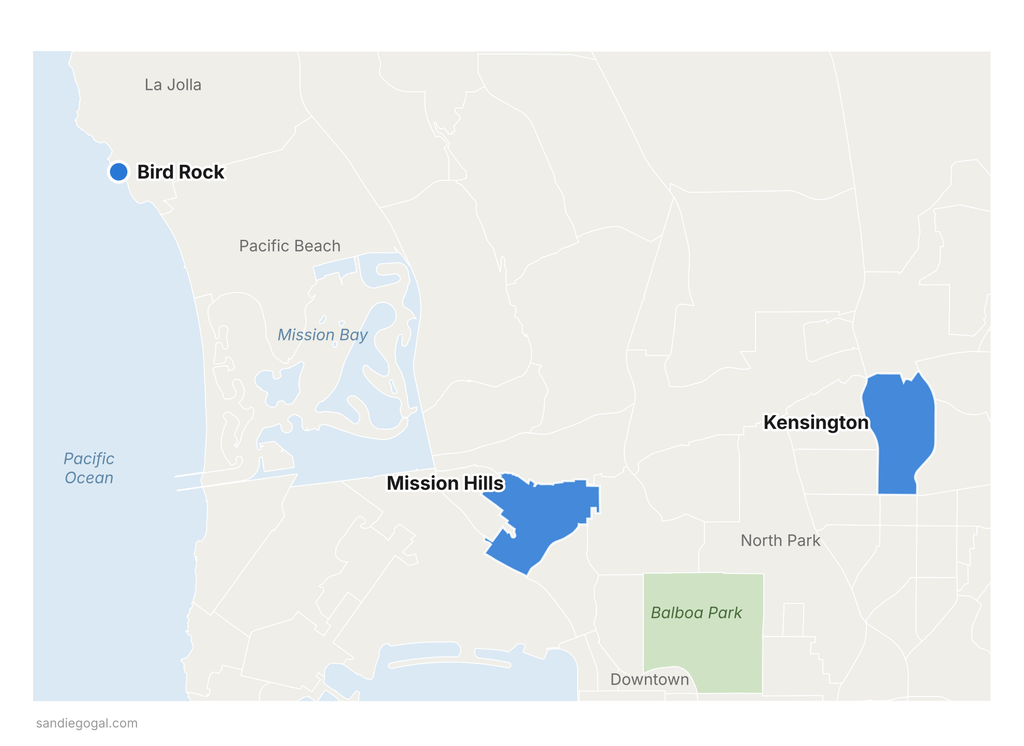
These didn’t make the main list, but they’re worth a look if you want walkability plus something specific.
- Bird Rock (74): the southern edge of La Jolla, with a walkable stretch of La Jolla Boulevard full of coffee shops and restaurants. If I lived in Bird Rock, I would always be walking to Wayfarer Bread & Pastry for my sourdough and sweet treats! You’ll have easy access to surfing longboard waves at Tourmaline with Pacific Beach next door.
- Kensington (71): a quieter, leafy neighborhood with a cute little main drag on Adams Avenue. Walking through Kensington is a journey through Spanish revival architecture.
- Mission Hills (70): gorgeous historic homes and a walkable core around Washington Street, though some blocks are steep. It has some of the most expensive real estate you’ll find outside the beach.
What Bay Area transplants should know before going car-light
Walkable doesn’t mean the same thing here as it does in SF. A few things I wish someone had told me:
- Transit is the real gap, not walking. San Diego’s citywide Transit Score is 37, compared to 77 in SF. Personally, I don’t know anyone who relies on public transit daily, though it can work depending on where you live and work. Most people I know use it to get to games at Petco Park or nights out in Little Italy, where parking is tight.
- The trolley is your friend if you live near it. Downtown and Old Town have the best access. The Blue Line now runs all the way up to UTC and UCSD, which is huge if you work up there.
- Plan on one car, not zero, for most households.
- Walk the neighborhood before you buy or rent. Test out your route so you won’t regret it!
Finding your walkable spot in San Diego
If walkability is at the top of your list, you’ve got options in San Diego. Read more here about where to start to find housing in San Diego, whether you’re renting or buying. Also, if you want an idea of how far your money can go in terms of purchasing a home here, read more here.
Thinking about moving to San Diego and trying to figure out where you’d actually be happy? I offer a free 20-minute chat to talk through neighborhoods, lifestyle, and whatever’s on your mind about making the move. Just last week I talked with three people I’d never met before, and it made my day to help them think through their decision. DM me on Instagram (@karenxding) or email me ([email protected]).

View comments
+ Leave a comment